The AI-Powered QSR: Smarter Digital Signage at Every Touchpoint
Turn Every Screen in Your Restaurant into an Opportunity
Every quick-service restaurant has a piece of real estate that gets more daily impressions than almost anything else in the building: the menu board. Yet for most QSRs, that board is still running the same static images on a loop, regardless of who’s standing in front of it, what time of day it is, or what’s actually selling.
AI-powered digital signage changes that. By layering object, motion, and gaze detection onto the screens QSRs already have, restaurants can turn passive menu boards and storefront displays into responsive tools that react in real time, and drive measurable results at the drive-thru, the counter, and the curb.
Make Your Drive-Thru Menu Board Fire on All Cylinders
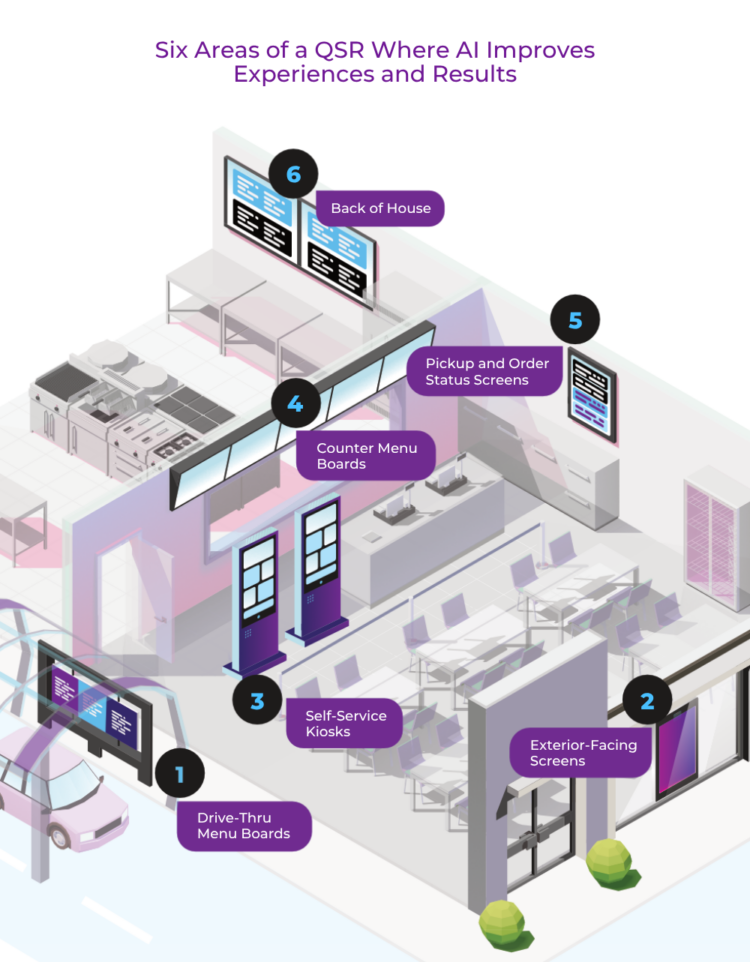
The drive-thru is not a mere side dish for most QSRs. With the drive-thru representing up to 70% of sales, according to the “2025 Drive-Thru Report” from QSR Magazine and Intouch Insight, it can be a big differentiator, and AI-powered screens can make the lane work harder in three specific ways:
- Detect vehicles and estimate audience to improve throughput. Object detection can identify if a vehicle is a single-occupant sedan or a large family in a minivan and adjust the drive-thru pre-sell board’s content hierarchy before the driver even reaches the speaker.
- Deliver dynamic menu recommendations by time of day or season. The same digital menu board that pushes breakfast items at 7 a.m. can pivot to a refreshing lemonade promotion by 2 p.m. in the summertime, all without touching a setting.
- Trigger suggestive selling based on audience context. Combine time-of-day patterns with historical transaction data for that daypart, and the screen effectively becomes a smart recommendation engine, not just a menu.
How Can Your QSR Drive Incremental Traffic?
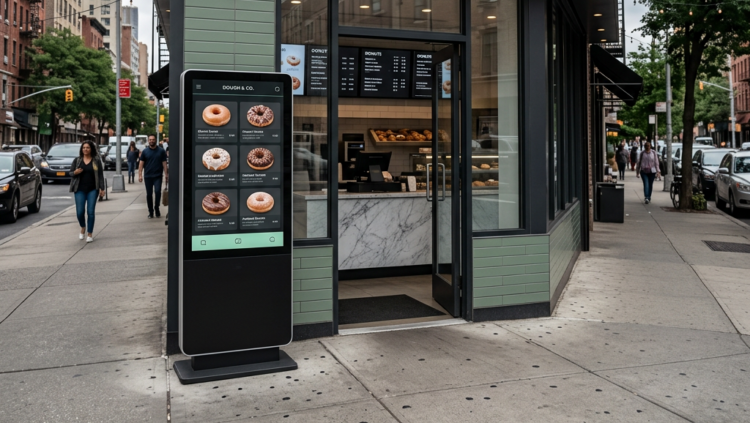
Digital signage doesn’t have to stop at the building’s edge. Exterior-facing, AI-powered screens can turn passersby into customers before they’ve even decided to walk in, by:
- Detecting pedestrian traffic in real time.
- Offering content based on contextual triggers.
- Promoting relevant offers to capture attention and drive decisions.
For QSRs in high-foot-traffic locations, this turns the storefront screen into an acquisition tool, not just a brand display.
Don’t Waste the Best Real Estate in Your Restaurant
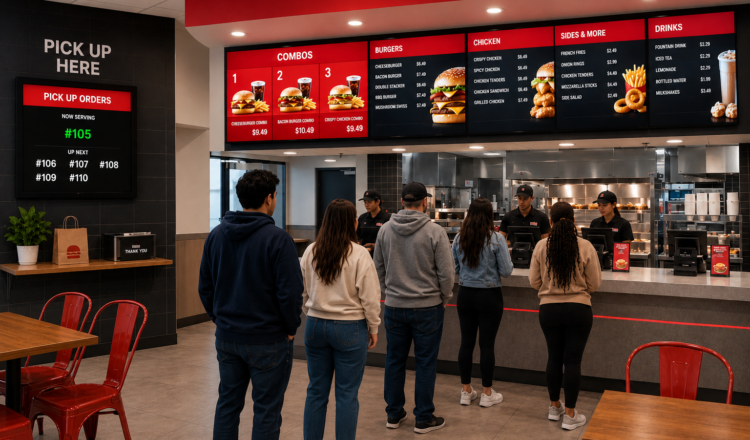
Once a customer pulls up to the drive-thru or counter, the menu board becomes the single highest-impact piece of real estate in the restaurant. AI-powered screens can convert that attention into revenue by:
- Promoting your loyalty program and limited-time offers, including QR codes that drive app downloads on the spot.
- Optimizing the menu layout based on gaze and engagement data, which can show you a pricing or positioning signal worth acting on immediately.
- Testing and refining content through A/B experimentation, rather than waiting for the next full menu redesign cycle.
Why This Matters Now
Restaurants are navigating real pressure from declining traffic and spend, and technology has become one of the clearest ways to close that gap. In fact, 80% of respondents to the National Restaurant Association’s 2026 State of the Restaurant Industry report say technology gives them a competitive edge, and the menu board is one of the highest-leverage places to apply that technology.
The common thread across all three use cases above is data. Screens that can ingest signals from the POS, inventory, weather, vehicles, and pedestrians in front of them can move from static content to responsive merchandising, and that shift is where the ROI starts to compound. Through the power of AI, digital screens can supply actionable data and enhanced experiences that improve both guest satisfaction and operational performance.
Where Else Can AI-Powered Screens Future-Proof Your Restaurant?
The three use cases above barely scratch the surface. AI-enabled signage can also power personalization at the individual level and drive operational efficiency behind the scenes, from smarter staffing to tighter inventory control.
Download the full infographic for a complete look at the six areas of a QSR where AI improves experiences and results, from self-service kiosks to back-of-house operations. Or get the complete AI-Driven Digital Signage Guide for more real-world data, QSR technology trends, the impact of smart digital signage, and how BrightSign’s edge-based neural processing units (NPUs) keep latency and security risks low, without compromising the overall experience.