BrightSign & Chaski Bring Museo Regional de Atacama to Life
BrightSign & Chaski Bring Award-Winning Chilean Museum to Life
Overview
When Chile’s award-winning Museo Regional de Atacama set out to transform its seven exhibition rooms into fully interactive experiences, it partnered with Chaski, a Santiago-based creative studio, to make it happen. Powered by 60+ BrightSign players across the entire installation, the museum now delivers immersive storytelling that runs reliably every day without dedicated technical staff.
The Challenge
The Museo Regional de Atacama is a state-funded institution, and the technology needed to run dependably for years without requiring ongoing capital investment. The museum defined the curatorial and narrative design across the geology, paleontology, culture, biodiversity, and astronomy rooms, while Chaski ensured its technical feasibility and implementation across all exhibition spaces.
Key requirements were:
- Reliability: The museum operates daily and cannot afford technical failures or the cost of on-site technical support.
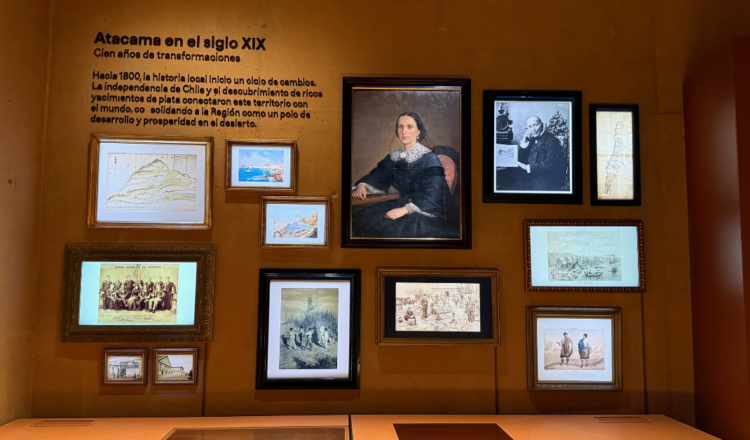
- Scalability: The brief called for video mapping, synchronized multi-screen playback, sensor-triggered audio and animation, interactive touchscreens, React-based web applications, and custom physical artifacts, all requiring a unified, manageable platform.
For Chaski founder Daniel Tirado Behrens, the decision to build on BrightSign was deliberate. Reliability was non-negotiable for a project of this scale and public significance.
“BrightSign gave us a robust platform to deploy synchronized video, interactive applications, and sensor-driven experiences across more than 60 endpoints. It allowed us to centralize control logic, manage content reliably, and ensure the system could operate continuously without on-site technical support.”
— Daniel Tirado, Technical Director & Founder, Chaski
The Solution
Chaski designed the complete system architecture and interactive software for the museum, working in partnership with local AV integrator VideoCorp, who supplied and installed all hardware including BrightSign players, projectors, LED screens, and displays.
60+ BrightSign Series 5 players are deployed across the museum, forming the backbone of nearly every exhibit. The system is orchestrated via a control system that communicates with each player over user datagram protocol (UDP), managing power states for projectors and coordinating scheduled routines, all triggered by a single button press for museum staff each morning.
BrightSign’s technology plays a central role throughout:
- Multi-player video sync drives video mapping projections, with Chaski pre-rendering content and looping it seamlessly across BrightSign players.
- BrightSignOS™ runs React-based web applications directly on the players with no external server required.
- GPIO and UDP command handling enables players to receive signals from the control system and Nexmosphere sensors, triggering interactive responses throughout the museum.
- Series 5 players handle synchronized multi-channel audio playback for ambient soundscapes across the exhibits.
- BrightSign-powered touchscreens run an interactive constellation-building experience in the final area of the museum.
The sensors throughout the museum enable touch-free, proximity-based interactions that provide visitors an interactive look at several exhibits.
The Benefits
Since opening, the museum has operated without a single BrightSign-related failure. For a state-funded institution without dedicated technical staff, this reliability has been transformative.
- Zero technical failures in the first month of public operation, across 60+ players and seven exhibition rooms.
- Effortless daily operation, with staff pressing a single button each morning and the system handling the rest.
- Long-term investment confidence, with infrastructure built to remain stable and serviceable for years without additional capital outlay.
- No on-site technical dependency, as museum staff require no technical knowledge to operate the system day-to-day.
“We approached the project as a translation process, from curatorial concepts to interactive systems. The goal was to create experiences that are meaningful for visitors, while ensuring the system operates reliably every day without requiring technical intervention.”
“Wonder and curiosity are central to our museographic approach. In this context, the use of technology allows us to enrich the visitor experience, make content more accessible, and inspire and engage those who visit the museum. These resources expand the ways in which people connect with the content, bringing them closer through emotion and participation.”
— Andrea Muller Benoit, Head of Exhibitions, National Subdirectorate of Museums, Chile
Looking Forward
With BrightSign’s scalable, purpose-built platform underpinning every exhibit, the Museo Regional de Atacama is well positioned to grow its offerings and update content for years to come. The infrastructure supports the museum’s mission to connect visitors with the stories of the Atacama region in ways that are engaging, accessible, and built to last.
Curatorial design and overall project coordination were led by the National Subdirectorate of Museums, Ministry of Cultures, Arts and Heritage. The project was funded by the Regional Government of Atacama and the National Cultural Heritage Service.
Bring Your Museum to Life
From proximity-triggered installations to synchronized video displays, discover how BrightSign digital signage players and solutions can help you deliver engaging, immersive experiences.