7 Ways In-Store Digital Displays Increase Retail Sales
The Digital Transformation Your Store Needs
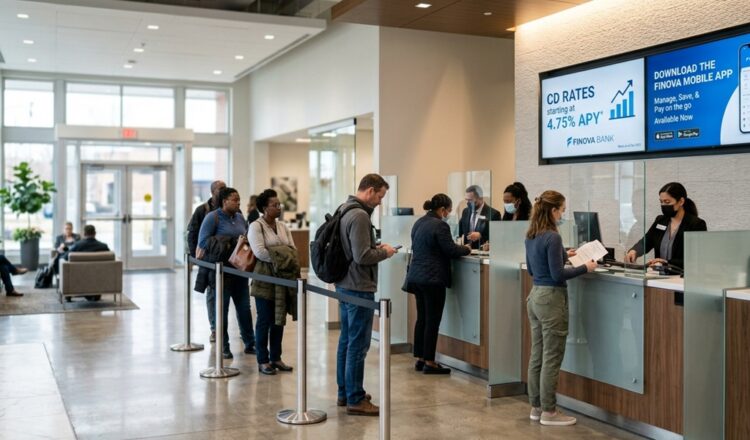
The challenge most retailers face isn’t a lack of foot traffic. It’s converting that traffic more effectively, promoting seasonal campaigns without print lead times and costs, and delivering the kind of personalized experience that keeps customers from pulling out their phones to price-check a competitor.
Retail digital signage closes those gaps by giving your physical locations the same agility your digital channels already have: the ability to update promotions instantly, respond to inventory, and deliver a consistent and engaging brand experience across every touchpoint. The retailers seeing the strongest results aren’t just using more screens. They’re using the right content, in the right locations, connected to the right data, on infrastructure built for reliability and security.
Here are seven proven ways in-store digital displays drive purchase decisions, boost basket size, and help physical retail compete in an e-commerce world.
1. Shelf-Edge Displays That Influence the Last Three Feet
The decision point in most retail categories isn’t on the website or from an email; it’s the three feet in front of the product. That’s where purchase decisions are made or abandoned.
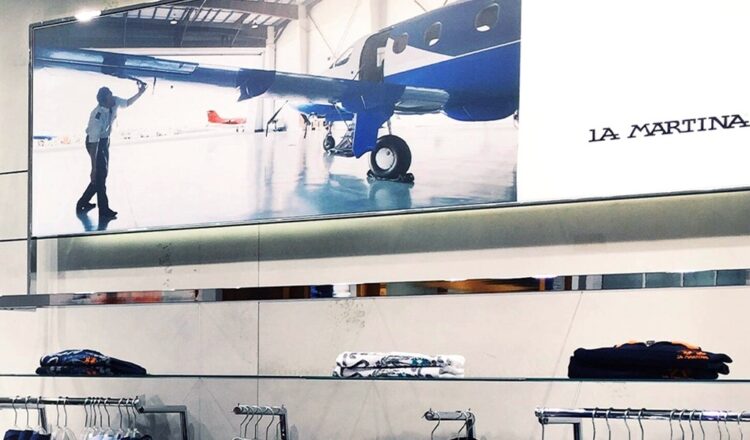
Static shelf tags can’t respond to a price change, a new promotion, or a competing offer. Digital signage for retail stores deployed at the shelf edge can. Electronic shelf labels and small-format digital displays placed at fixture level give merchandising and operations teams the ability to update pricing, highlight bundle offers, and surface product comparisons in real time, without labor-intensive reprinting or compliance risk from outdated signage.
For categories with high price sensitivity or frequent promotional cycles — consumables, health and beauty, consumer electronics — shelf-edge displays consistently drive uplift in both conversion and average unit retail.
What to get right: Content refresh workflows and integration with your pricing or product information management (PIM) system matter more than screen size here. BrightSignOS™ supports live data feeds natively, enabling real-time price and promotional updates to pull directly from your existing systems’ integrations. So, the display reflects what’s current now, not what was current when the content was last manually pushed.
2. Window Signage That Keeps Up with Digital Advertising
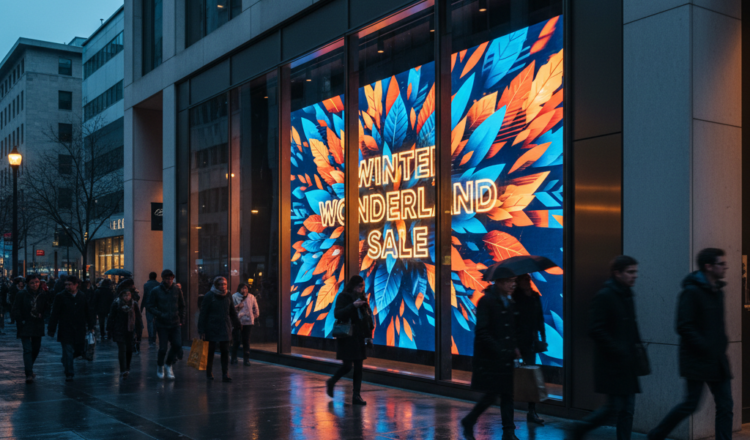
Your storefront window is premium real estate. For most retailers, it’s also static and changed seasonally at best, requiring physical labor and print production lead times that don’t align with how fast campaign priorities shift.
Eye-catching digital displays in window-facing positions let you run campaign creative on the same schedule as your digital advertising. A promotional message that goes live on paid social Thursday morning can be reflected in your windows Thursday morning. Creative from a summer campaign can transition to a back-to-school push when seasons or temperatures change.
From a foot traffic standpoint, motion and light draw attention. Window-mounted in-store digital displays consistently outperform static treatments in attracting pedestrian interest, particularly for retailers in high-density urban or mall environments.
What to get right: Fresh, bold content matters significantly in window applications, and digital displays need to be readable at a quick glance. Beyond creative design, the operational advantage of window signage is only realized if content can be updated quickly and reliably. That requires a device management platform that supports remote content, scheduled campaigns, and continuous operation without requiring on-site intervention.
3. Point-of-Purchase (POP) Displays That Increase Basket Size
Impulse purchase categories — accessories, add-ons, consumables, warranties — perform better when prompted at the right moment. Point-of-purchase displays, digital POPs in particular, let you serve contextually relevant content at checkout or near high-margin areas without relying on static signage that may not align with what’s actually in stock or promoted.
A customer buying a camera doesn’t need to be told about cameras at POP. They need to be reminded about memory cards, cases, and protection plans. Digital POP displays let you dynamically serve those messages based on what’s trending in-store, what’s overstocked in the back room, or what promotions need to move before end of week.
For multi-location retailers, this is also where centralized device management pays off. Updating a POP promotion across hundreds of stores in a single workflow, rather than coordinating physical distribution, reduces campaign lead times and eliminates the risk of a store running outdated creative.
What to get right: Keep content short, high-contrast, and action-oriented. POP is not the place for brand storytelling. It’s a conversion tool that runs continuously in high-traffic positions, and your content needs to reflect today’s promotions on the right screens, or you may lose the sale. The good news is: the right hardware and software can help. BrightSign’s device manager comes free with every player, making it easy to issue commands from anywhere. Combined with BrightSign’s dedicated content management service, you can unlock all your player’s capabilities to create, schedule, and monitor content across every screen.
4. Seasonal and Campaign Signage That Aligns with Marketing
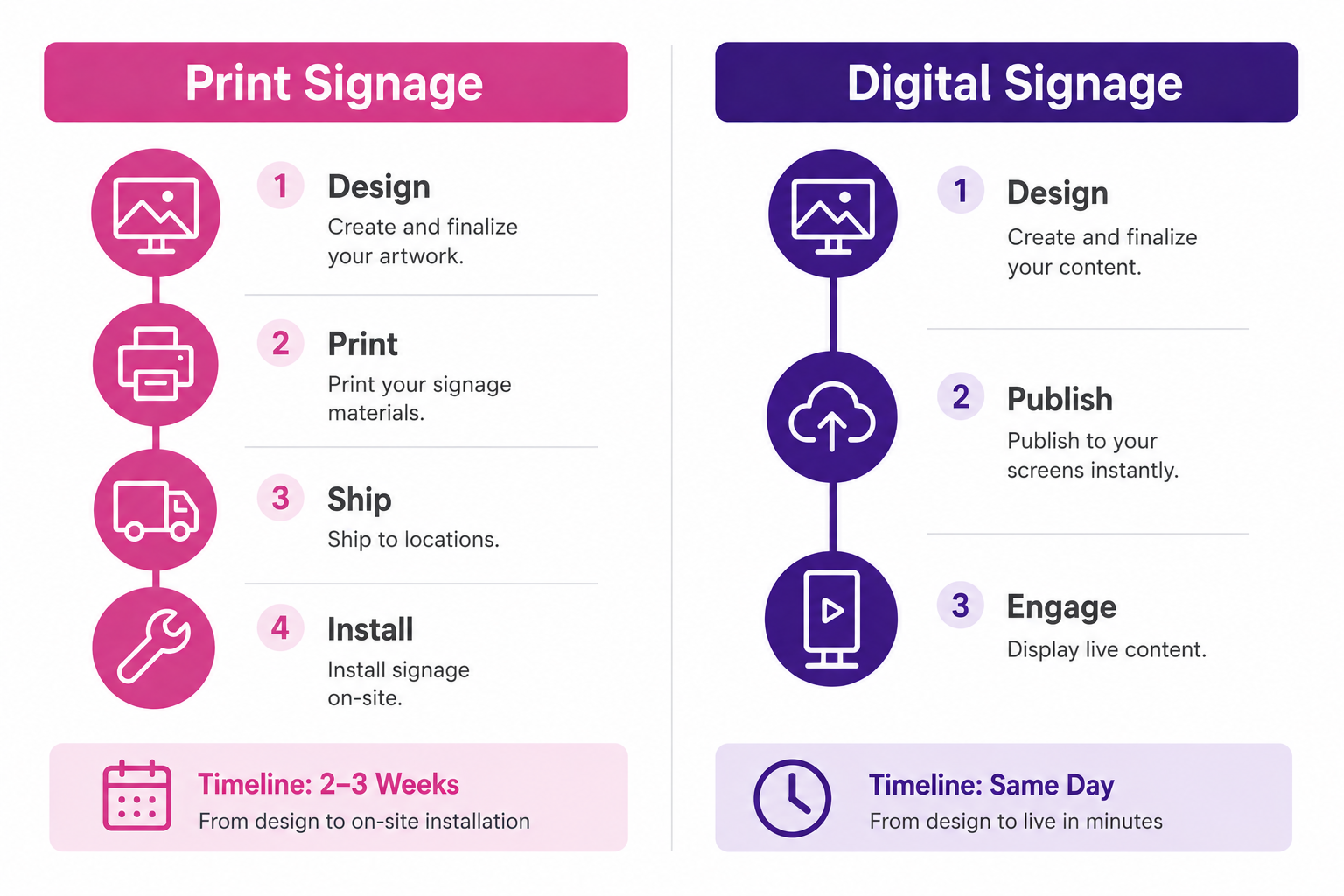
Retail marketing teams know the problem well: the in-store environment lags behind everything else. By the time physical campaign assets are designed, printed, shipped, and installed, the campaign is already running everywhere else — or in some cases, already over.
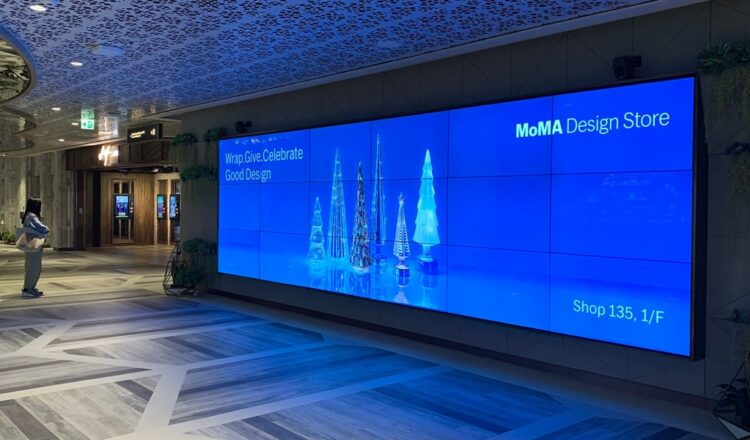
Retail signage solutions built on a reliable digital infrastructure let marketing teams publish campaign creative to stores the same day assets go live in other channels. The store environment becomes a coordinated part of the campaign mix, not an afterthought.
This is particularly valuable for retailers managing multiple seasonal campaigns annually, promotional events with hard start/end dates (Black Friday, Valentine’s Day, back-to-school), or franchise and licensed environments where brand compliance needs to be enforced consistently across operators.
What to get right: Scheduling and dayparting capabilities matter. Campaign content should run automatically on campaign dates without store-level staff intervention. That requires a content management platform built for it, not one that was adapted for it. With over 200 CMS partners compatible with BrightSign players, you’re not locked into a single platform. You choose the CMS that fits your existing workflows and switch if your needs change, without replacing your hardware.
5. Interactive Kiosks and Displays That Help Staff On-Floor
Labor constraints are a persistent operational reality in retail. Interactive retail kiosk deployments and displays don’t replace associates, but they do handle the high-volume, repeatable tasks that pull associates away from higher-value customer interactions: product lookup, stock availability, size and configuration options, loyalty program enrollment, and wayfinding in large-format stores.
Lift-and-learn technology takes this a step further. When a customer picks up a product, embedded sensors trigger the nearest display to surface relevant content automatically, including detailed specs, side-by-side comparisons, customer reviews, compatible accessories, or promotional pricing. It’s the in-store equivalent of a product detail page, delivered at the exact moment of consideration.
For categories with complex SKU structures — consumer electronics, home improvement, apparel with extensive size/color options, beauty — self-service kiosks and this kind of contextual content delivery reduce friction at the moment customers need information. A customer who can’t find an answer leaves. A customer who finds the answer at a kiosk and locates the product often converts.
Interactive kiosks also provide a data layer traditional in-store environments typically lack. Touch interaction and gaze detection data tells you what customers are looking for, what they’re not finding, and where the content gaps are in your product presentation.
What to get right: The hardware underneath these experiences matters. Interactive kiosks in high-traffic retail environments run continuously, and a screen that freezes, lags, or requires frequent reboots doesn’t just underperform — it actively damages the customer experience. Hardware purpose-built for 24/7 commercial operation, self-healing capabilities, and always-on reliability keeps kiosks and interactive displays running smoothly without requiring on-site intervention.
6. Omnichannel Signage That Connects the Physical and Digital Experience
Customers don’t just experience your brand on a single channel. When the in-store environment reflects a different message, promotion, or aesthetic than your website, app, or email program, that inconsistency registers. It creates friction, and friction reduces conversion.
Omnichannel retail signage means the in-store environment is connected to the same content ecosystem as your digital channels. Promotions are consistent. Brand creative is consistent. And where relevant, digital touchpoints in the store — QR codes on displays, loyalty program prompts, product detail screens — connect to the digital experience customers already know.
This integration also opens up AI-powered personalization at scale. BrightSign’s edge AI capabilities enable context-triggered content that responds to real-time inputs — audience presence data, time of day, and in-store conditions — without individual-level tracking or cloud dependency.
What to get right: To achieve the data integrations and connected workflows an omnichannel strategy requires, you need buy-in across marketing, IT, and operations teams. A platform with open APIs, a broad CMS partner ecosystem, a secure operating system, and long-term software support is what makes these integrations feasible to sustain. It’s an infrastructure investment as much as a content investment, that matters as much to IT as it does to marketing.
7. Data-Driven Content That Improves Over Time
The most underutilized capability of modern in-store digital signage isn’t the hardware; it’s the feedback loop. When displays are connected to a content management platform with analytics, you gain visibility into what content runs, when it runs, and increasingly — through integration with point-of-sale (POS), traffic counters, and loyalty data — what impact it has on behavior.
This changes the strategy for in-store content. Instead of treating signage as a one-way broadcast medium, retailers with mature digital signage programs use it iteratively: testing creative approaches, measuring correlation with sales lift, and allocating screen time the same way a digital media buyer allocates impressions — based on what’s actually working.
BrightSign’s edge AI goes further. The built-in neural processing unit (NPU) runs AI models locally, enabling dynamic content optimization based on real-time inputs — current inventory levels, time of day, foot traffic patterns, and local conditions — without the latency or reliability risks of cloud-based AI. Audience intelligence and engagement-aware content delivery happen at the player level, so the signage environment responds continuously, rather than on a fixed content schedule.
For marketing and operations leaders, this is the long-term argument for digital over static. Static signage tells you nothing after it’s installed. Digital signage, built on the right platform, tells you lots and lets you act on it.
What to get right: Define what you’re trying to measure before you deploy. Attribution is genuinely hard in physical retail, but it’s not impossible. The retailers getting the most value from their signage investments are the ones who’ve built the measurement framework alongside the display infrastructure and who’ve chosen a platform capable of supporting that program for the long term, not just at launch.
Choosing the Right Foundation
The tactics above work, but they work because the underlying infrastructure is reliable, manageable at scale, and capable of integrating with the data systems retailers already have.
When evaluating digital signage for retail stores, the questions that matter most aren’t about screen size or resolution. They’re about uptime reliability, security, content management, integration flexibility, and total cost of ownership.
BrightSign media players are engineered for the demands of commercial retail environments and backed by the longest hardware warranty in the industry, at five years. BrightSignOS manages your full hardware stack, enables AI models at the edge, and receives long-term software updates that keep your deployment secure and current well beyond the hardware lifecycle. But BrightSign hardware is also a sustainable choice; designed for low power consumption with the ability to shut down connected displays during off hours. Its modular architecture lets you replace components rather than entire systems, reducing both operating costs and hardware waste.
Free device management is included with every player purchased, so enterprise-scale fleet management doesn’t require a separate platform or subscription. The result is a lower total cost of ownership than the initial hardware investment might suggest, and an infrastructure built to deliver ROI across the full life of the deployment.
The retailers winning with in-store digital aren’t necessarily the ones with the most screens. They’re the ones who’ve built the foundation to keep those screens running, up-to-date, and commercially focused from day one.
Interested in how BrightSign powers in-store retail deployments at scale? Explore our retail digital signage solutions or talk to an expert.